Explore our comprehensive catalog of micro-credential courses designed to boost your skills and career. Flexible, industry-aligned, and recognized by employers.
Lead Instructors:
Zannatul Ferdoush (Senior Lecturer, Department of Nutrition and Food Engineering, DIU)
Juwel Rana (Assistant Professor, Department of Nutrition and Food Engineering, DIU)
Dr. Nizam Uddin (Associate Professor and Head, Department of Nutrition and Food Engineering, DIU)
Guest Instructor:
Zoheb Hasan Fahad (Scientific Officer, Bangladesh Agricultural Research Institute)
⏱ Duration: 3 Days (21 hours total, 7 hours per day) | Blended (Online + In-Person Practical Workshop)
Course Description
This course bridges the gap between food innovation, research, and academic publishing by teaching learners how to convert practical food product development into structured research articles.
Evidence of Demand
The food sector has experienced rapid expansion driven by consumer demand for safe, nutritious, sustainable, and innovative food products. At the same time, research institutions emphasize applied research outputs, yet a significant gap exists: many students and industry professionals lack the skills to convert practical product work into structured research articles suitable for publication.
Purpose and Objectives
The purpose of this course is to equip learners with the ability to convert product development processes into structured research frameworks. Objectives include:
Understand the relationship between food product development and research publication.
Apply appropriate research methodologies in food product development studies.
Analyze and interpret data from food product testing and evaluation.
Convert product development processes into structured research frameworks.
Develop well-organized research articles based on product innovation projects.
Apply academic writing standards, including referencing and journal formatting.
Course Content & Class Plan (Modules)
Tentative Syllabus:
Module 1: Introduction to Food Product Development and Research
Module 2: Research Methodology for Product-Based Studies
Module 3: Chemical and Quality Analysis of Innovative Food Products
Module 4: Sensory Evaluation of Food Products
Module 5: Data Analysis and Interpretation
Module 6: Academic Writing and Publication
Module 7: Capstone Project
Practical & Field Work
Practical Project: Hands-on development of food products (accounts for 30% of the final grade).
Laboratory Work: Utilizing chemical analysis facilities for proximate analysis (moisture, ash, protein, fat, fiber) and engaging in sensory testing methods like hedonic scaling and ranking.
Capstone Project: The development of a food product-based research paper integrating proximate analysis, sensory evaluation, and demand evidence, culminating in manuscript preparation and presentation.
Learning Outcomes
Upon completion, students will be able to:
Explain the relationship between food product development and academic research publication.
Conduct proximate analysis (moisture, ash, protein, fat, fiber, carbohydrate) for innovative food products.
Perform sensory evaluation using appropriate methods.
Design research studies based on food product development processes.
Collect and analyze data from chemical, sensory, and consumer-based studies using appropriate techniques.
Interpret and integrate experimental results into coherent research findings.
Develop a structured research article based on food product innovation.
Apply academic writing and referencing skills for publication.
Prepare and present a complete product-based research manuscript.
Target Audience
Undergraduate students in Food Science and Technology, Nutrition, Engineering, Biotechnology, Innovation & Entrepreneurship and related fields.
Postgraduate students (MSc) working on food product development or applied research projects.
Diploma in Food Technology students.
Entry Requirements
Minimum Age: 18 years and above.
Qualifications: Enrollment in or completion of a Bachelor's degree in Food Science and Technology, Nutrition, Biotechnology, Agriculture, Chemistry, or related fields.
Career Pathways
This course supports career advancement into roles such as:
Food Product Development Scientist
Research and Development (R&D) Officer
Quality Assurance / Quality Control Specialist
Food Laboratory Analyst
Tools & Resources
Laboratory Facilities: Well-equipped Food Science Laboratory for product development and analysis, basic food processing equipment, chemical analysis facilities, glassware, and safety equipment.
ICT and Software Resources: Computers or laptops with internet access and statistical software (e.g., SPSS, Excel) for data analysis.
Academic Resources: Textbooks and reference materials in Food Science, Food Chemistry, and Product Development.
Assessment Criteria
Daily Quizzes & Assignments: 40%
Practical Project (Development of Products): 30%
Final Exam (Comprehensive analytical test covering all modules): 30%
Standard Course Fee
Base Fee: BDT 1500




Join thousands of students already enrolled
⏱ Duration: 21 Hours. | Mode of Delivery: In-person
Instructor(s)
Course Description
This professional course is designed to equip learners with the core research skills and the technical foundation in Python, Machine Learning, and Deep Learning required to begin a publishable research project. The course is structured in a natural research flow: learners first build the research foundation, then immediately learn the data analysis tools, and finally come back to the writing and publication preparation steps.
Evidence of Demand
Purpose and Objectives
Course Content & Class Plan (Modules)
Practical & Field Work
Learning Outcomes
Upon completion, participants will be able to:
Target Audience & Requirements
Career Pathways
Tools & Resources
Assessment Criteria
Financial Information


Join thousands of students already enrolled
Dr. Nizam Uddin : Associate Professor and Head, Department of Nutrition and Food Engineering, DIU
Rifat Khan Tushar : Founder & CEO, Water and Plant.
Md. Naimur Rahman : Lecturer, Department of Nutrition and Food Engineering, DIU
⏱ Duration: 20 Hours | Mode of Delivery: Blended Learning (Interactive Lectures + Applied Laboratory Demonstrations + Practical Culinary/Cultivation Workshops)
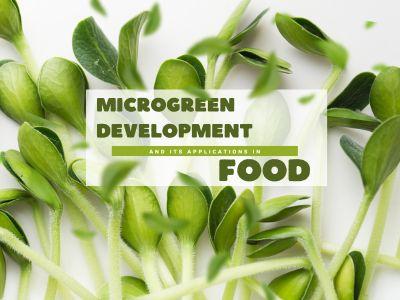
This comprehensive 20-hour course provides participants with practical knowledge and hands-on skills in sustainable microgreen production, post-harvest management, nutritional profiling, and microgreen-enriched food product development. It is designed to empower learners to formulate functional foods and construct viable commercial models tailored to urban agriculture ecosystems.
Rapidly expanding global wellness and culinary market projections highlight an increasing reliance on nutrient-dense functional foods. Urban populations, particularly in rapidly densifying cities like Dhaka, face spatial limits for traditional cultivation, driving high demand for microgreen indoor agriculture, vertical farming solutions, and specialized knowledge in commercial post-harvest packaging.
Purpose: To provide participants with practical knowledge and hands-on skills in sustainable microgreen production, post-harvest management, nutritional profiling, and microgreen-enriched food product development.
Differentiate microgreens from sprouts and baby greens based on developmental stages and growth parameters.
Master environmental media preparation, substrate selection, and seed density setups.
Formulate, execute, and evaluate functional food applications (salads, smoothies, enriched bakery items).
Construct a viable commercial model tailored to microgreen urban agriculture ecosystems.
Module 1: Introduction to Microgreens (3 Hours): Taxonomy, definition boundaries, sustainable food value chains, global market trends, and practical identification of common species.
Module 2: Microgreen Production Techniques (5 Hours): Seed selection protocols, substrates, watering schedules, light/temperature management, and practical production tray setups.
Module 3: Harvesting & Post-Harvest Management (3 Hours): Identification of maturity indicators, sanitation loops, packaging configurations, shelf-life extension methods, and structural laboratory report formulation.
Module 4: Nutritional and Functional Properties (3 Hours): Evaluation of phytochemicals, anti-inflammatory properties, comparative analysis with mature plants, and diagnostic literature review exercises.
Module 5: Food Applications of Microgreens (4 Hours): Functional food synthesis, incorporation into ready-to-eat products, sensory panel analysis, and a food product development workshop.
Module 6: Entrepreneurship & Commercial Production (2 Hours): Cost-benefit analysis, vertical urban farming scaling, local market branding, and business model canvas formulation.
Cultivation: Practical production tray setups, seedling sowing, watering, and disease management.
Harvest & Post-Harvest: Identifying maturity indicators and executing packaging and shelf-life extension methods.
Culinary Workshop: Formulating and testing microgreen-enriched functional foods (salads, smoothies) using systematic sensory standards.
Business Planning: Designing scalable urban farming business strategies and mapping budget layouts.
Upon successful completion, learners will be able to:
Distinguish suitable microgreen seed varieties, select growing media, and control target environment variables.
Demonstrate practical seedling sowing, watering, disease management, and harvesting procedures.
Formulate and test a microgreen-enriched functional food product using systematic sensory standards.
Design a scalable, resource-efficient urban farming business strategy mapping budget layouts and revenue lines.
Target Audience:
Students of Nutrition, Food Engineering, Agriculture, Food Science, Public Health.
Commercial entrepreneurs, urban planners, home gardeners, and hospitality or food industry processing professionals.
Basic computer literacy and fundamental understanding of basic biological or health sciences.
Open to beginners; no prior farming or advanced culinary certification required.
Minimum Age: 18 Years.
Earns 1 Credit Hour within the DIU-MCA framework.
Establishes the foundational technical skills required for direct pathways into higher-tier programmatic specializations such as Advanced Controlled Environment Agriculture (CEA), Commercial Hydroponic System Design, or Functional Food Enterprise Management.
Fully mapped to an Outcome-Based Education (OBE) scheme:
Functional Product Development Project: 20%
Hands-On Lab Work & Cultivation Maintenance Tasks: 20%
Business Plan Group Presentation: 15%
Final Technical Viva Voce Defense: 15%
Objective Module Quizzes: 10%
Conceptual Assignments & Research Tasks: 10%
Comprehensive Post-Harvest Laboratory Report: 10%
Climate-controlled training lab, specialized seedling trays, growing substrates (Cocopeat/biodegradable mats).
Optimized growth lighting grids, clean seed banks, food preparation facility tools.
Access to the DIU Learning Management System (LMS).
Class Size: Maximum 25-30 participants per operational batch.
Tentative Course Fee: 2,500 BDT (DIU Students/Alumni/Agriculture and Nutrition Research Members) | 4,500 BDT (External Candidates/Entrepreneurs).
Certification: Micro-credential professional certification (1 Credit Hour equivalent) issued upon successful completion.


Join thousands of students already enrolled
Instructor(s):
Md. Shahadoth Hossain | Lecturer, Department of Nutrition and Food Engineering, Daffodil International University
Md. Sakhawot Hossain | Lecturer, Department of Nutrition and Food Engineering, Daffodil International University
Tasniya Akter | Lecturer, Department of Nutrition and Food Engineering, Daffodil International University
Md. Hafizul Islam | Industry Expert & Research Associate, Center for Non-communicable Diseases and Nutrition, BRAC James P Grant School of Public Health, BRAC University
Duration: 21 Hours
Delivery Mode: Online / In-person / Blended
Course Description
This micro-credential equips learners with applied competencies that are highly valued in academic research, public health programs, and evidence-informed policymaking. It addresses current skill gaps by providing hands-on training across the complete research process, bridging the gap from study design and data analysis to scientific writing and publication.
Evidence of Demand
There is a growing demand for professionals with practical research skills in public health nutrition as Bangladesh and the South Asian region continue to address undernutrition, micronutrient deficiencies, and the rising burden of non-communicable diseases. Universities, research institutes, NGOs, and development partners increasingly seek graduates and early-career professionals who can design studies, analyze data, and communicate findings through scientific publications. However, undergraduate programs often provide limited hands-on training across this complete research process.
Course Objectives
This course aims to equip learners with the full research pipeline in public health nutrition, from study design through to scientific publication and dissemination.
Course Content & Class Plan (Modules)
Module 1: Introduction to Public Health Nutrition Research Role of research in public health nutrition, identifying research gaps, research questions and hypotheses, and conceptual/theoretical frameworks.
Module 2: Study Design and Research Methodology Quantitative, qualitative, and mixed-methods research; observational, experimental, and quasi-experimental studies; implementation and operational research; conducting systematic reviews and meta-analysis.
Module 3: Sampling and Data Collection Sampling strategies, sample size determination, questionnaire development, dietary assessment methods, anthropometry and biomarkers, digital data collection tools, and acquisition of secondary data.
Module 4: Nutritional Epidemiology and Interpretation Nutrition and health indicators (women's, child, and population health), food security and diet quality, interpreting epidemiological findings, and translating research evidence into policy and practice.
Module 5: Scientific Writing and Reporting Guidelines Writing each section of a scientific paper, reporting guidelines (STROBE, CONSORT, PRISMA, RECORD), reference management (Zotero, Mendeley, EndNote), and ethical reporting/plagiarism prevention.
Module 6: Data Management and Statistical Analysis Data cleaning and management, handling missing data, descriptive and inferential statistics, regression analysis/adjusting for confounders, statistical software (R, Stata, SPSS), and interpreting/presenting results.
Module 7: Journal Selection, Manuscript Formatting, and Submission Selecting an appropriate journal, formatting manuscripts, writing cover letters, graphical abstract preparation, online manuscript submission systems, and navigating the peer-review process.
Module 8: Research Ethics, Grant Writing, and Research Dissemination Research ethics and IRB approval, informed consent, grant proposal development/budget preparation, and research communication (conference presentations and policy briefs).
Practical & Field Work
Drafting a functional research protocol and ethics application summary.
Developing a data analysis plan and presenting results using a sample dataset.
Preparing a publication-ready manuscript (or substantial draft) alongside a cover letter and journal selection rationale.
Learning Outcomes
After completing the course, participants will be able to:
Explain the role of research in advancing public health nutrition; identify research gaps and formulate clear research questions and hypotheses.
Distinguish between quantitative, qualitative, and mixed-methods approaches; select an appropriate study design.
Choose suitable sampling strategies, calculate sample size, and develop/pilot data collection instruments.
Select and interpret nutrition and health indicators to assess nutritional status, diet quality, food security, and population health.
Write each section of a scientific paper following reporting guidelines (STROBE, CONSORT, PRISMA, RECORD).
Clean, code, and manage a research dataset; apply descriptive/inferential statistics and regression analysis using R/Stata/SPSS.
Prepare a publication-ready manuscript, select an appropriate journal, and navigate submission and peer review.
Obtain ethics/IRB approval, develop a grant proposal, and communicate research through presentations and policy briefs.
Target Audience & Requirements
Target Audience: Undergraduate students.
Entry Requirements: A basic knowledge of nutrition, public health, and statistics is required as a prerequisite.
Minimum Age: 18 years or above.
Career Pathways
Academic Progression: Supports undergraduate and postgraduate research in Nutrition, Public Health, Epidemiology, and related disciplines. Provides a strong foundation for Master's and PhD programs requiring research and scientific writing skills. Facilitates progression to advanced research-focused micro-credentials.
Professional Progression: Prepares learners for research assistant, research associate, monitoring and evaluation, and data analyst roles in universities, research institutes, NGOs, and development organizations. Enhances competitiveness for research fellowships, graduate admissions, and funded research opportunities.
Tools & Resources
Laptop, Projector, White board & Marker pen.
Assessment Criteria
Research protocol – 15%
Ethics application summary – 10%
Data analysis plan – 15%
Results presentation (using a sample dataset) – 20%
A publication-ready manuscript (or a substantial draft) – 30%
Cover letter and journal selection rationale – 10%
Certification
Awarded a Certificate of Completion by the DIU Micro-Credentials Academy, recognizing competency in public health nutrition research methods and scientific communication.
Financial Information
Tentative Course Fee: 3,500 BDT




Join thousands of students already enrolled

Mohammad Mustafizur Rahman, Assistant Professor, Department of English, Daffodil International University.
Sakiba Binte Yusuf, PhD Research Fellow, School of International Studies, Zhengzhou University, Henan, China.
⏱ Duration: 12 Hours (12 Classes × 60 Minutes) | Mode: Online
This beginner-friendly, hands-on micro-credential course is designed to help participants understand and practice the complete research paper writing process in a clear, practical, and academically responsible manner. Moving beyond pure theory, the course uses a running demo study, guided worksheets, classroom activities, peer review, and instructor feedback to walk learners through formulating research questions to preparing a publishable manuscript or comprehensive research-paper blueprint.
Research paper writing has become an essential academic and professional competency for university students, postgraduates, scholarship applicants, and early-career academics who must prepare theses, conference papers, and evidence-based reports. Beginners and non-native English-speaking learners often understand their subject matter but struggle with structuring topics, synthesizing literature, applying methodologies, adopting APA 7 conventions, avoiding plagiarism, and responsibly leveraging AI tools while preserving academic integrity. This course directly bridges these workbench-level writing and publication gaps.
This course aims to:
Help learners understand the importance and role of research in academia and industry.
Guide learners to identify focused, ethical topics and develop effective titles, problem statements, and research questions.
Teach systematic methods to search, evaluate, synthesize, and cite scholarly literature using APA 7.
Clarify core research designs, sampling strategies, data-collection procedures, analysis techniques, and research ethics.
Guide section-by-section drafting of academic papers from Abstract to Appendices.
Promote responsible, integrity-first use of AI tools and verification of genuine vs. fabricated evidence.
Enable participants to produce an actionable mini research paper or research blueprint.
Class 1: Why Research Matters – University study, higher education, real-life problem-solving, and intro to the running demo paper.
Class 2: Structure of a Research Paper – Title, Abstract, Keywords, IMRAD structure, References, and Appendices.
Class 3: Choosing a Research Topic and Title – Novelty, researchability, research gaps, working vs. publication-style titles.
Class 4: Writing the Introduction – Context, problem statement, research gap, objectives, research questions, and significance.
Class 5: Writing the Literature Review – Finding credible sources, synthesizing, identifying gaps, and conceptual frameworks.
Class 6: Writing the Methodology – Research design, population/sample, sampling, instruments, reliability/validity, and ethics.
Class 7: Writing the Results/Findings – Organizing quantitative and qualitative findings, tables, percentages, themes, and evidence.
Class 8: Writing the Discussion – Interpreting findings, linking to research questions/literature, and explaining implications.
Class 9: Writing the Conclusion, Recommendations, Limitations, and Future Research.
Class 10: APA 7 In-text Citations and References – Paraphrasing, reference lists, DOIs, URLs, and plagiarism avoidance.
Class 11: Writing the Abstract, Keywords, Appendices, and Final Paper Assembly – Academic consistency and presentation.
Class 12: From Draft to Research Ready – Editing, proofreading, responsible AI use, peer review, and final presentation.
Topic Formulation & Problem Statement Sprints: Transforming raw ideas into viable titles, research gaps, and research questions.
Literature Search & Citation Labs: Live database retrieval exercises in Google Scholar, reference synthesis, and APA 7 list building.
Methodology & Data Interpretation Workshops: Designing sample parameters, building basic results tables, and drafting discussion sections.
Peer Review & Capstone Blueprint Formulation: Evaluating draft sections against research integrity standards, validating AI outputs, and finalizing the mini research-paper submission.
After completing the course, participants will be able to:
Explain the standard structure and basic principles of an academic research paper.
Convert broad interests into focused, researchable topics with clear objectives and research questions.
Locate, evaluate, and synthesize scholarly literature into a coherent literature review.
Select appropriate research designs and articulate sampling, instruments, analysis, and ethical safeguards.
Present quantitative/qualitative findings using structured tables, themes, and evidence.
Interpret results logically against previous literature and research questions.
Write effective conclusions, recommendations, limitations, and future research avenues.
Apply APA 7 citation, referencing, and academic formatting standards accurately.
Identify plagiarism, fabricated citations, invented data, and ethical integrity violations.
Utilize generative AI tools responsibly without compromising academic authorship.
Prepare and present a structured mini research paper or publishable blueprint.
Undergraduate students across all disciplines.
Final-year students preparing projects, theses, or research assignments.
Fresh graduates preparing postgraduate applications or scholarship submissions.
Master's and beginning postgraduate students.
Early-career researchers, academics, and professionals writing evidence-based reports.
Non-native English speakers seeking a structured foundation in academic writing.
Minimum Higher Secondary Certificate (HSC) or equivalent.
Basic English reading and writing proficiency.
Basic computer literacy and internet navigation skills.
Access to a laptop/computer for writing practicums.
Minimum Age: 18 Years.
Prior publication experience is not required.
After completing this micro-credential, learners may:
Produce undergraduate and postgraduate theses or capstone project papers.
Prepare abstracts, posters, and full papers for academic conferences.
Submit stronger writing samples for international scholarships and master's/PhD admissions.
Advance to specialized training in systematic reviews, advanced quantitative/qualitative methodologies, or journal manuscript preparation.
Enhance analytical reporting skills for careers in academia, think tanks, NGOs, policy institutes, and development organizations.
Software & Digital Platforms: Microsoft Word (or equivalent word processor), Google Scholar, and academic database platforms.
Delivery Infrastructure: Online meeting and presentation software with stable internet connectivity.
Learning Materials: Course handbook, lecture notes, running demo research paper, practical worksheets, and APA 7 quick-reference guides.
Final Mini Research Paper / Research Blueprint – 25%
Topic, Title, Problem, and Research-Question Task – 15%
Literature Review and APA 7 Citation Task – 15%
Methodology Planning Task – 15%
Results / Discussion Interpretation Exercise – 15%
Class Participation and Guided Activities – 10%
Final Presentation / Viva – 5% (Passing Requirement: Minimum 40% overall score with satisfactory attendance per MCA policy)
Tentative Course Fee: BDT 1,000 only
Class Size: Maximum 20–30 participants
Certification: Micro-Credential Certificate issued by DIU-MCA upon completing assessment requirements


Join thousands of students already enrolled
Try adjusting your filters to see more courses.
