Course Details

Back To All Courses
Course Image

Course Overview

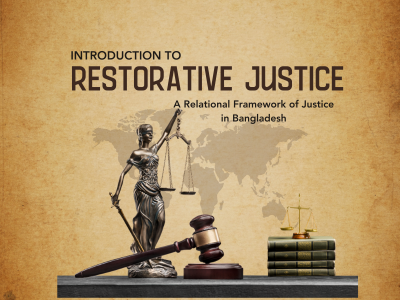
Restorative Justice: A Relational Framework of Justice in Bangladesh

⏱ Duration: 12 Hours (Total) | 6 Lectures (2 Hours each)

Instructor

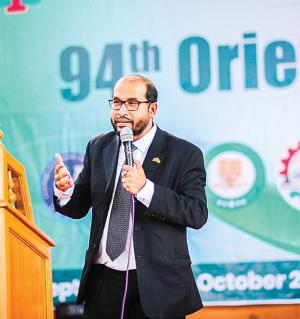
  • Lead Instructor: Dr. Muhammad Asadullah
  • Affiliation: Visiting Professor, Dept. of Law, DIU; Associate Professor, Justice Studies, University of Regina, Canada.
  • Distinctions: Recipient of 2024 CTL Teaching Award, President’s Teaching Scholar, and Best Paper Prize from the European Society of Criminology.

Course Description 

This introductory course offers a brief history and key themes of Restorative Justice (RJ), positioning it as a paradigm shift from traditional punitive justice. It critically examines the values, principles, and practices of RJ, exploring major themes such as relationship building and community strengthening in detail.

Evidence of Demand

  • Global Phenomenon: Restorative Justice (RJ) is now used in over 100 countries to address the deeper aspects of crime and conflict.
  • Critical Need in Bangladesh: There is a critical need for alternative dispute resolution mechanisms to support Village Courts, Indigenous justice systems, and community policing.
  • Professional Skill Gap: Legal professionals, NGO workers, and community leaders increasingly require skills to facilitate justice that focuses on healing and relationship building rather than just punishment.

Purpose and Objectives 

This course aims to introduce the history, values, and principles of Restorative Justice. Objectives:

  • Critically examine RJ values like respect, humility, and responsibility.
  • Explore the role of RJ in building relationships and strengthening communities.
  • Provide a framework to apply RJ lenses to day-to-day conflicts and macro-level social changes.

Course Content & Class Plan

  • Module 1: Why does this matter? (RJ as a paradigm shift, Notion of conflict).
  • Module 2: What is it? (Definition, Values: Respect, Humility, Responsibility).
  • Module 3: Does it work? (Evidence, Measuring success, Peacemaking circles, Victim-offender mediation).
  • Module 4: Building Relationships (Relational theory of justice).
  • Module 5: Building Community (Role of community in resolving conflicts).
  • Module 6: Implementation (RJ in day-to-day life, Living restoratively).

Practical & Field Work

  • Interactive Delivery: The course utilizes an interactive mode comprising lectures, experiential learning exercises, and role-plays.
  • Case Analysis: Students will apply RJ principles to specific real-world scenarios through final case analysis.

Learning Outcomes Upon completion, participants will be able to:

  • Explain the history and key concepts of Restorative Justice.
  • Articulate the core values and principles of RJ.
  • Identify various RJ practices within the Bangladesh context (Village Courts/Indigenous).
  • Apply the Restorative Justice lens to personal and professional life.

Target Audience

  • Law Students and Legal Professionals.
  • NGO Workers and Human Rights Activists.
  • Police Officers and Village Court Officials.
  • Social Workers and Community Leaders.
  • Anyone interested in Peace and Conflict Studies.

Entry Requirements

  • Academic: Higher Secondary Certificate (HSC) or Bachelor’s degree (ongoing/completed).
  • Interest: Interest in social justice and community service.
  • Age: Minimum 18 Years.

Career Pathways After completing this course, learners may progress to roles such as:

  • Mediator / Arbitrator
  • Restorative Justice Facilitator
  • Village Court Assistant
  • NGO Program Officer (Human Rights/Justice)

Assessment Criteria

  • Worksheets & Reflections (40%): Weekly submission based on readings.
  • Participation (30%): Engagement in role-plays and discussions.
  • Final Case Analysis (30%): Applying RJ principles to a specific scenario.

Resource Requirements

  • Materials: Reading materials (Fisher, Zehr, Braithwaite) and handouts for worksheets.
  • Facilities: Multimedia classroom.

Tentative Course Fee

  • Daffodil Students: BDT 1,500
  • Non-Daffodil Participants: BDT 2,500 (This is a promotional offer).

Course Details
Duration: 05 Mar 2026 - 29 Mar 2026
Faculty: Humanities & Social Sciences
Level: Beginner to Advanced
Mode: Offline
Price: 1500 BDT 2500
Your Instructors
Instructor
Dr. Ass. Professor M Asadullah, PhD

Associate Professor, University of Regina, Canada | 2024 CTL Teaching Award Recipient
What You'll Learn
  • Foundations of Restorative Justice & Conflict Transformation Explores the history of Restorative Justice and its role as a paradigm shift in understanding and transforming conflict.
  • Core Principles, Values, and Ethical Frameworks Examines the core definitions, ethical frameworks, and essential values including respect, humility, and responsibility.
  • Evidence-Based Practices & Intervention Models Reviews evidence-based success metrics and key practices such as Peacemaking Circles and Victim-Offender Mediation.
  • The Relational Framework: Building Connections & Community Analyzes the Relational Theory of Justice and the community's vital role in preventing and resolving interpersonal conflicts.
  • Strategic Implementation & Living Restoratively Provides strategies for applying restorative lenses to daily life challenges and fostering macro-level social change.
Ready to Start Learning?

Join thousands of students already enrolled

Lifetime access

Certificate included

30-day money back

Enroll Now