Course Overview
Fundamentals of Astronomy and Astrophysics
Instructor(s):
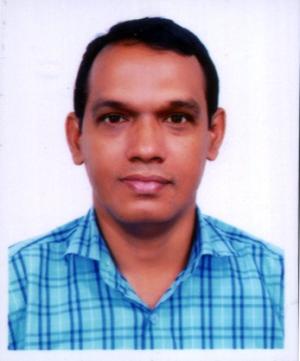
- Arif Ahmed: Professor of Practice, Dept. of MCT, DIU.
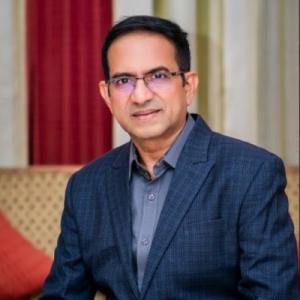
- Ahmad Al-Imtiaz: Researcher in Observational Astronomy.
⏱ Duration: 12 Weeks | 36 Hours Total (3 Hours per week) | Mode: Blended (Online theory + In-person observation sessions)
Course Description
This course provides a solid foundation in the theoretical aspects of astrophysics and the practical application of observational tools. It is designed to foster scientific thinking and inspire learners toward advanced space science studies by offering interdisciplinary insights linking physics, mathematics, and technology.
Evidence of Demand
An online survey showed that over 90% of respondents expressed strong interest in astronomy and astrophysics-related training. With growing global curiosity about space and increasing accessibility to tools like telescopes and astrophotography, there is a rising demand for structured foundational knowledge in Bangladesh and beyond.
Course Objectives
This course aims to:
- Build a solid foundation covering the solar system, stars, galaxies, and the universe.
- Teach practical skills in observational astronomy and astrophotography.
- Encourage scientific thinking, data interpretation, and analysis.
- Inspire learners toward careers/education in astrophysics.
- Provide interdisciplinary insights linking physics, math, and technology.
Course Content & Class Plan (Modules)
Tentative Syllabus (Highlights):
- Weeks 1-2 / Module 1: Introduction to Astronomy and Astrophysics – Overview, history, and key concepts.
- Weeks 3-4 / Module 2: Solar System and Planetary Science – Planets, moons, orbits, and analyzing orbital data.
- Weeks 5-6 / Module 3: Stellar Astronomy – Stars, the Hertzsprung-Russell (HR) Diagram, and stellar evolution.
- Weeks 7-8 / Module 4: Galaxies and Cosmology – Galaxy types, Big Bang theory, and Dark Matter.
- Weeks 9-10 / Module 5: Observational Astronomy – Telescopes and Astrophotography basics.
- Weeks 11-12 / Module 6: Advanced Topics – Black Holes, Relativity, and Exoplanets.
Practical & Field Work
- Observation Sessions: Hands-on telescope sessions and observation projects.
- Astrophotography: Practical applications using CCD cameras, DeepSkyStacker, and PixInsight.
- Data Analysis: Plotting HR diagrams, analyzing orbital data, and interpreting observational outputs.
Learning Outcomes
Upon completion, participants will be able to:
- Understand key astronomical and astrophysical concepts.
- Identify and describe celestial objects and phenomena.
- Use telescopes and basic astrophotography tools effectively.
- Interpret observational data and produce astrophotography outputs.
- Recognize the interdisciplinary nature of space science.
Target Audience & Requirements
Target Audience:
- Undergraduate students in physics, engineering, and related fields.
- Educators, amateur astronomers, and science communicators.
- Space enthusiasts seeking structured learning.
Entry Requirements:
- Minimum Qualifications: High school-level understanding of physics and mathematics.
- Experience: No prior experience in astronomy is required.
- Minimum Age: 18 years or older.
Career Pathways
After completing this micro-credential, learners may progress to:
- Advanced Study: Preparation for astrophysics, cosmology, or observational astronomy programs.
- Professional Roles: Careers in space research, science education, and science communication.
- Outreach & Hobby: Practical applications in astrophotography and telescope-based outreach programs.
Assessment Criteria
- Projects: Astrophotography projects and observation logs – 40%.
- Quizzes & Assignments: Regular knowledge checks – 30%.
- Final Exam: Comprehensive assessment – 30%.
Tools & Resources
- Equipment: Telescopes, CCD cameras, and tripods.
- Software: Astrophotography tools such as DeepSkyStacker and PixInsight.
- Facilities & Materials: Classroom with a projector and internet access, lecture slides, star charts, and reference books.
- Class Size: 25-30 participants.
Financial Information, Remuneration & Certification
- Tentative Course Fee: 5,000 BDT (For Promotional offer).
- Promotional offer Fee : 3,000 BDT (30% OFF)