Dr. Nizam Uddin : Associate Professor and Head, Department of Nutrition and Food Engineering, DIU
Rifat Khan Tushar : Founder & CEO, Water and Plant.
Md. Naimur Rahman : Lecturer, Department of Nutrition and Food Engineering, DIU
⏱ Duration: 20 Hours | Mode of Delivery: Blended Learning (Interactive Lectures + Applied Laboratory Demonstrations + Practical Culinary/Cultivation Workshops)
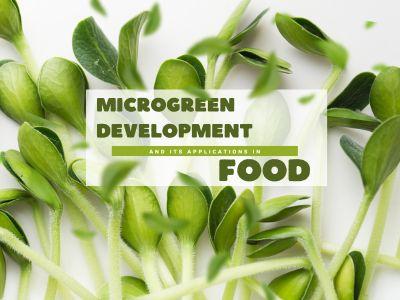
This comprehensive 20-hour course provides participants with practical knowledge and hands-on skills in sustainable microgreen production, post-harvest management, nutritional profiling, and microgreen-enriched food product development. It is designed to empower learners to formulate functional foods and construct viable commercial models tailored to urban agriculture ecosystems.
Rapidly expanding global wellness and culinary market projections highlight an increasing reliance on nutrient-dense functional foods. Urban populations, particularly in rapidly densifying cities like Dhaka, face spatial limits for traditional cultivation, driving high demand for microgreen indoor agriculture, vertical farming solutions, and specialized knowledge in commercial post-harvest packaging.
Purpose: To provide participants with practical knowledge and hands-on skills in sustainable microgreen production, post-harvest management, nutritional profiling, and microgreen-enriched food product development.
Differentiate microgreens from sprouts and baby greens based on developmental stages and growth parameters.
Master environmental media preparation, substrate selection, and seed density setups.
Formulate, execute, and evaluate functional food applications (salads, smoothies, enriched bakery items).
Construct a viable commercial model tailored to microgreen urban agriculture ecosystems.
Module 1: Introduction to Microgreens (3 Hours): Taxonomy, definition boundaries, sustainable food value chains, global market trends, and practical identification of common species.
Module 2: Microgreen Production Techniques (5 Hours): Seed selection protocols, substrates, watering schedules, light/temperature management, and practical production tray setups.
Module 3: Harvesting & Post-Harvest Management (3 Hours): Identification of maturity indicators, sanitation loops, packaging configurations, shelf-life extension methods, and structural laboratory report formulation.
Module 4: Nutritional and Functional Properties (3 Hours): Evaluation of phytochemicals, anti-inflammatory properties, comparative analysis with mature plants, and diagnostic literature review exercises.
Module 5: Food Applications of Microgreens (4 Hours): Functional food synthesis, incorporation into ready-to-eat products, sensory panel analysis, and a food product development workshop.
Module 6: Entrepreneurship & Commercial Production (2 Hours): Cost-benefit analysis, vertical urban farming scaling, local market branding, and business model canvas formulation.
Cultivation: Practical production tray setups, seedling sowing, watering, and disease management.
Harvest & Post-Harvest: Identifying maturity indicators and executing packaging and shelf-life extension methods.
Culinary Workshop: Formulating and testing microgreen-enriched functional foods (salads, smoothies) using systematic sensory standards.
Business Planning: Designing scalable urban farming business strategies and mapping budget layouts.
Upon successful completion, learners will be able to:
Distinguish suitable microgreen seed varieties, select growing media, and control target environment variables.
Demonstrate practical seedling sowing, watering, disease management, and harvesting procedures.
Formulate and test a microgreen-enriched functional food product using systematic sensory standards.
Design a scalable, resource-efficient urban farming business strategy mapping budget layouts and revenue lines.
Target Audience:
Students of Nutrition, Food Engineering, Agriculture, Food Science, Public Health.
Commercial entrepreneurs, urban planners, home gardeners, and hospitality or food industry processing professionals.
Basic computer literacy and fundamental understanding of basic biological or health sciences.
Open to beginners; no prior farming or advanced culinary certification required.
Minimum Age: 18 Years.
Earns 1 Credit Hour within the DIU-MCA framework.
Establishes the foundational technical skills required for direct pathways into higher-tier programmatic specializations such as Advanced Controlled Environment Agriculture (CEA), Commercial Hydroponic System Design, or Functional Food Enterprise Management.
Fully mapped to an Outcome-Based Education (OBE) scheme:
Functional Product Development Project: 20%
Hands-On Lab Work & Cultivation Maintenance Tasks: 20%
Business Plan Group Presentation: 15%
Final Technical Viva Voce Defense: 15%
Objective Module Quizzes: 10%
Conceptual Assignments & Research Tasks: 10%
Comprehensive Post-Harvest Laboratory Report: 10%
Climate-controlled training lab, specialized seedling trays, growing substrates (Cocopeat/biodegradable mats).
Optimized growth lighting grids, clean seed banks, food preparation facility tools.
Access to the DIU Learning Management System (LMS).
Class Size: Maximum 25-30 participants per operational batch.
Tentative Course Fee: 2,500 BDT (DIU Students/Alumni/Agriculture and Nutrition Research Members) | 4,500 BDT (External Candidates/Entrepreneurs).
Certification: Micro-credential professional certification (1 Credit Hour equivalent) issued upon successful completion.



Join thousands of students already enrolled
Lifetime Support
Certificate included
