Course Overview
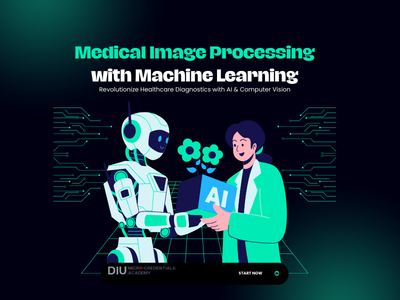
Medical Image Processing with Machine Learning : Revolutionize Healthcare Diagnostics with AI & Computer Vision
Instructors:
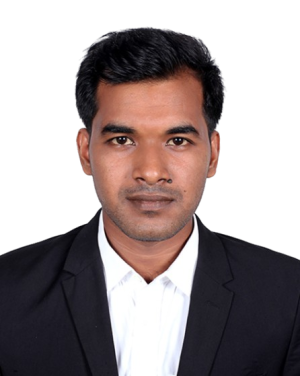
- Dr. S M Hasan Mahmud (Associate Professor, Dept. of SWE, DIU)
- Md. Tarek Aziz (AI Engineer, ATI Limited)
⏱ Duration: 6 Weeks | 24 Contact Hours (Blended: Online Lectures + In-person/Virtual Labs)
Evidence of Demand
The global AI in Healthcare market is currently experiencing explosive growth, creating a massive skills gap in the intersection of medicine and technology. Hospitals, diagnostic centers, and HealthTech startups are actively seeking specialized engineers who can analyze complex medical data—such as MRI, CT scans, and X-Rays—using Artificial Intelligence.
This skill set is becoming critical for the modern telemedicine and automated diagnostics industry, particularly for tasks such as the automated detection of tumors, pneumonia, and other pathologies. Despite the high demand, there is a scarcity of professionals capable of bridging the technical gap between traditional biomedical engineering and modern machine learning implementation.
Purpose and Objectives
This course is designed to bridge the gap between Biomedical Engineering and Artificial Intelligence, equipping learners with the ability to build automated diagnostic systems.
The course aims to:
- Master Pixel-Level Analysis: Provide deep technical knowledge of medical image formats (DICOM/NIfTI) and manipulation.
- Apply Advanced AI: Teach the application of Machine Learning and Deep Learning to solve real-world diagnostic problems.
- Automate Diagnostics: Enable students to build systems for detecting diseases like Cancer or Pneumonia automatically.
- Bridge Theory and Practice: Connect academic theory with real-world medical datasets to ensure industry readiness.
Detailed Course Content & Class Plan
This course follows a structured week-by-week progression from foundational image handling to advanced Deep Learning deployment.
Week 1: Introduction & Image Handling
- Theory: Understanding medical image formats (DICOM vs. NIfTI) and Ethics in Medical AI.
- Tools: OpenCV, NumPy, pydicom, Matplotlib.
- Lab: Loading, visualizing, and manipulating real MRI/CT scans.
Week 2: Preprocessing Techniques
- Theory: The critical importance of data cleaning in Medical AI pipelines.
- Techniques: Noise reduction, Histogram equalization, and Image normalization.
- Lab: Enhancing low-quality MRI data to improve analysis accuracy.
Week 3: Image Segmentation
- Theory: Strategies to separate the "Disease" (ROI) from the "Background" anatomy.
- Techniques: Thresholding, Region-growing, and Watershed algorithms.
- Lab: Automated Tumor Segmentation task.
Week 4: Feature Extraction & ML Classifiers
- Theory: Converting images into quantitative data using Statistical & Texture features.
- Techniques: Haralick features and Shape descriptors.
- Lab: Training classic ML classifiers (SVM/Random Forest) to detect Pneumonia patterns and evaluating with ROC/Confusion Matrices.
Week 5: Deep Learning in Medical Imaging
- Theory: Leveraging the power of Convolutional Neural Networks (CNNs) in diagnostics.
- Techniques: Transfer Learning (VGG16, ResNet) and Explainable AI (Grad-CAM) to visualize model decisions.
- Lab: Building a Deep Learning model for Multi-class Disease Classification.
Week 6: Capstone Project & Showcase
- Project: Design and build an end-to-end diagnostic solution (e.g., "Brain Tumor Detection System" or "Bone Fracture Analyzer").
- Presentation: Defense of findings, model accuracy, and real-world applicability to industry experts.
Learning Outcomes
After completing the course, participants will be able to:
- Process Medical Data: Handle and manipulate complex medical image formats using Python libraries.
- Enhance Quality: Apply noise reduction and preprocessing techniques to improve diagnostic clarity.
- Segment Anatomy: Isolate critical regions, such as tumors, from surrounding tissue.
- Train Models: Develop and train Machine Learning and Deep Learning models for precise disease classification.
- Deploy Pipelines: create a complete, end-to-end medical imaging analysis pipeline.
Target Audience
- University Students: 3rd to 4th-year students in CSE, BME, EEE, CIS, or SWE.
- Medical Professionals: Radiologists and clinicians interested in the intersection of healthcare and AI.
- Data Scientists: Professionals looking to pivot their career into the Healthcare domain.
- ML Engineers: Practitioners seeking specialized skills in computer vision for medicine.
Entry Qualifications
- Programming: Basic Python programming skills are required.
- Interest: A strong interest in Medical AI (Basic ML knowledge is helpful but not mandatory).
- Minimum Age: 18 Years.
Progression Pathway
After completing this micro-credential, learners may progress to roles such as:
- Medical Computer Vision Engineer
- Biomedical Data Scientist
- AI Research Assistant
- HealthTech Entrepreneur
Assessment Criteria
- Final Capstone Project: 40% (End-to-end solution design)
- Mini Projects (Labs): 30% (Practical implementation of weekly concepts)
- Weekly Quizzes: 20% (Theoretical understanding)
- Participation: 10% (Engagement in lectures and labs)
Resource Requirements
Tools, Instruments & Materials
- Software Environment: Python (Jupyter Notebook / Google Colab).
- Libraries: OpenCV, NumPy, pydicom, Matplotlib, TensorFlow/Keras or PyTorch.
- Hardware: Computers with GPU support (or Cloud access).
- Data: Real-world Medical Datasets (e.g., Kaggle, NIH X-Ray).
Standard Course Fee: Tk 5,000/-
The following discounts currently apply:
- Daffodil Students: Tk 3,000/-
- Non-Daffodil Students: Tk 3,000/- (Discounted from BDT 5,000)