Course Overview
Conflict Resolution : Transforming Challenges into Opportunities
⏱ Duration: 12 Hours (Total) | 6 Lectures (2 Hours Each)
Instructor
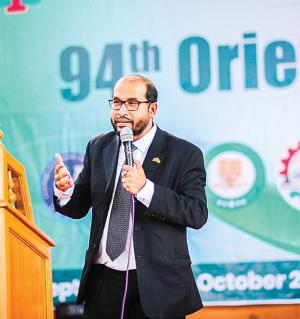
- Lead Instructor: Dr. Muhammad Asadullah
- Affiliation: Visiting Professor, Dept. of Law, DIU; Associate Professor, Justice Studies, University of Regina, Canada.
- Distinctions: Recipient of 2024 CTL Teaching Award, President’s Teaching Scholar, and Best Paper Prize from the European Society of Criminology.
Course Description
This introductory course familiarizes participants with key concepts of conflict, peace, conflict transformation, justice, and reconciliation. It moves beyond government-led resolutions to empower citizens with the skills to address crimes and conflicts at personal, relational, structural, and cultural levels. Through the "Peacebuilding Wheel" model, participants examine intervention options, their strengths and limitations, and how to choose contextually appropriate solutions.
Evidence of Demand
- Ubiquity of Conflict: Crimes and conflicts are pervasive issues affecting communities at personal, relational, structural, and cultural levels, creating a constant need for resolution skills.
- Need for Constructive Change: There is a critical need for professionals and community members who can address issues through constructive change processes rather than punitive measures.
- Sector-Wide Demand: Significant demand exists for skills in conflict analysis, nonviolent communication, and peacebuilding interventions across policing, social services, education, and community leadership sectors.
Purpose and Objectives
The purpose of this course is to familiarize participants with key concepts of conflict transformation, justice, and reconciliation. Objectives:
- Understand different conflict analysis tools (Pyramid, Onion, Conflict Tree).
- Develop essential skills for facilitating conflict resolution and reflective practice.
- Apply peacebuilding interventions using the "Peacebuilding Wheel" model.
- Examine strengths and limitations of various intervention models.
Course Content & Class Plan
- Week 1: Understanding Conflict: Theories of conflict, violence vs. conflict, community relations, and conflict transformation.
- Week 2: Tools for Conflict Analysis: Deep dive into analytical models including the Pyramid, Onion, Conflict Tree, and Timeline models.
- Week 3: Shame and Trauma: Understanding reintegrative vs. stigmatizing shame and the impact of trauma on conflict.
- Week 4: Peacebuilding Wheel: Exploration of Trauma Healing, Restorative Justice, Human Security, and Spirituality.
- Week 5: Nonviolent Communication & Active Listening: Developing emotional intelligence, empathy, and a reflective mindset.
- Week 6: Mediation and Negotiations: Theories and types of mediation and negotiation strategies.
Practical & Field Work (Experiential Learning)
- Mode of Delivery: Interactive Workshop comprising lectures, role-plays, and case studies.
- Methodology: The course relies heavily on experiential learning exercises and participatory methods.
- Class Limit: Class size is capped at 30 participants to ensure effective role-play and engagement.
Learning Outcomes
Upon completion, participants will be able to:
- Analyze conflicts using tools like the Onion and Conflict Tree models.
- Apply analytical tools to interpersonal and community case studies.
- Demonstrate reflective practice skills essential for conflict resolution.
- Design appropriate peacebuilding interventions for different conflict levels.
Target Audience
- Professionals in Policing and Justice Studies
- Community Leaders and Social Service Providers
- School Teachers, Educators, and Parents
- Youth & Outreach Workers
- Individuals interested in Social Science
Entry Requirements
- Academic: Open to all (No specific academic prerequisite mentioned).
- Interest: A strong interest in social justice and community peacebuilding.
- Age: Minimum 18 years.
Career Pathways
Completing this course supports progression into roles such as:
- Mediator / Arbitrator
- Community Outreach Coordinator
- Peacebuilding Program Officer
- Restorative Justice Facilitator
- Social Worker
Tools & Resources
- Classroom: Multimedia setup for case study videos.
- Materials: Reading materials (Fisher, Braithwaite, Rosenberg).
- Visual Aids: Whiteboard/Flipcharts for mapping conflict trees.
Assessment Criteria
- Participation & Role-Play (40%): Engagement in experiential exercises.
- Case Study Analysis (30%): Applying tools to a real-world conflict scenario.
- Reflective Journal/Quiz (30%): Understanding of core concepts.
Tentative Course Fee
- Daffodil Students: BDT 1,500
- Non-Daffodil Participants: BDT 2,500 (This is a promotional offer)